

Selecting a wheelchair is a decision that goes far beyond basic mobility. The right choice can influence a person’s independence, comfort, safety, and overall quality of life. For many users and caregivers, the decision often comes down to one key question: manual wheelchair or transport wheelchair?
Although these two options may appear similar at first, they are built for very different purposes. This comprehensive guide breaks down how each type works, who it’s designed for, and how to determine which wheelchair best aligns with your daily routine and mobility goals.
What Is a Manual Wheelchair?

A manual wheelchair is a user-driven mobility device designed for individuals who are able to propel themselves, either independently or with minimal assistance. It remains one of the most widely used wheelchair types across home, community, and outdoor environments.
When considering a manual wheelchair for everyday use, it’s essential to look beyond the basic design. Factors such as frame construction, wheel size, seat ergonomics, and total weight all play an important role in long-term comfort and performance.
How Manual Wheelchairs Function
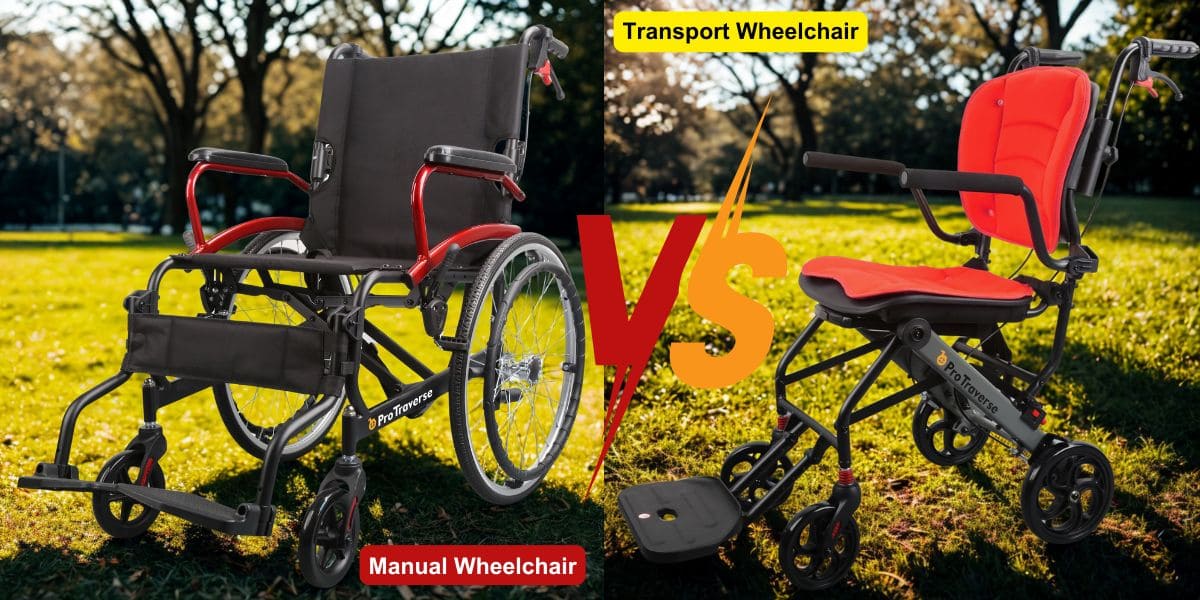
Manual wheelchairs are equipped with large rear wheels and hand rims, allowing users to control movement through pushing and steering motions. Smaller front caster wheels provide balance and help guide direction.
Most models are foldable and adjustable, with multiple seat sizes and materials available. These features make manual wheelchairs well suited for extended daily use, whether indoors or outdoors.
Who Is a Manual Wheelchair Best For?
Manual wheelchairs are commonly recommended for:
- Users with adequate upper-body strength
- Individuals seeking independence and personal control
- People who rely on a wheelchair for many hours each day
- Active users who navigate both indoor and outdoor spaces
Because of their versatility and durability, manual wheelchairs are typically chosen for long-term mobility needs rather than occasional use.
Common Manual Wheelchair Use Cases
Manual wheelchairs are frequently used for:
- Everyday movement within the home
- Outdoor travel on sidewalks, ramps, and paved surfaces
- School, work, or community participation
- Situations where independence is a priority
Their adaptability makes them a strong choice for users who prefer to move without constant caregiver involvement.
What Is a Transport Wheelchair?

A transport wheelchair, also known as a transport chair, is designed to be pushed by a caregiver. Unlike manual wheelchairs, transport models do not support self-propulsion.
These chairs are built with convenience and portability in mind, making them ideal for short-term or assisted mobility.
Key Characteristics of Transport Wheelchairs
Transport wheelchairs typically include:
- Small rear wheels without hand rims
- Lightweight frames for easy lifting
- Compact folding mechanisms
- Push handles for caregivers
Because users cannot move the chair independently, transport wheelchairs prioritize ease of handling over user autonomy.
Who Transport Wheelchairs Are Designed For
Transport wheelchairs are particularly suitable for:
- Seniors who depend on caregiver support
- Individuals with limited arm or shoulder strength
- Short-term mobility needs
- Patients recovering from surgery or injury
They are commonly used in hospitals, clinics, rehabilitation centers, and assisted living settings. In these environments, portable folding transport chairs with features such as telescopic handles are especially helpful, as they allow caregivers to move and store the chair efficiently during short transfers.
Typical Situations for Transport Wheelchair Use
- Transport wheelchairs are often used for:
- Doctor visits and medical appointments
- Airport navigation and travel
- Brief outings outside the home
- Emergency or occasional mobility needs
They are not designed for prolonged daily use over many hours.
Manual vs. Transport Wheelchair: Key Differences at a Glance

Understanding the functional differences between these two wheelchair types is critical when making a decision.
| Feature | Manual Wheelchair | Transport Wheelchair |
|---|---|---|
| User Control | Self-propelled | Caregiver-propelled |
| Rear Wheel Size | Large (20–24 inches) | Small (under 12 inches) |
| Independence Level | High | Low |
| Overall Weight | Moderate to heavy | Lightweight |
| Portability | Foldable, less compact | Very compact when folded |
| Comfort Duration | Suitable for long-term use | Best for short periods |
| Indoor Use | Good maneuverability | Excellent on smooth floors |
| Outdoor Use | Better on uneven surfaces | Limited |
| Caregiver Effort | Minimal for independent users | Required at all times |
| Typical Use | Daily mobility | Travel and short outings |
| Cost Range | Moderate to higher | Generally more affordable |
| Maintenance | More components | Simple upkeep |
Which Wheelchair Fits Your Lifestyle?
Your daily routine, physical ability, and level of independence should guide your choice.
For Independent Daily Users
If independence, long-term comfort, and self-mobility are important, a manual wheelchair is often the better solution. Users frequently look for strong frames, efficient wheels, and supportive seating to reduce fatigue during daily movement.
To make a more informed decision, many users find it helpful to review guidance that focuses specifically on everyday use. This guide on how to select the right wheelchair for everyday mobility offers practical insights into evaluating wheelchair design, comfort, and usability based on real-life daily routines.
For Seniors Who Rely on Caregivers
Transport wheelchairs are well suited for seniors who cannot propel themselves and depend on caregivers for movement. Their lightweight design reduces strain on caregivers while improving safety during assisted transfers.
For Frequent Travelers
For users who travel often, transport wheelchairs are typically preferred. Their compact, foldable design makes them easy to store in vehicles and suitable for airline travel.
For Short-Term Recovery or Post-Surgery Use
During recovery from surgery or injury, a transport wheelchair may provide sufficient support until strength and mobility improve.
Pros and Cons of Manual Wheelchairs
Benefits of Manual Wheelchairs
- Promotes independence
- Designed for everyday, long-term use
- Performs well outdoors
- Offers customization options
- Encourages upper-body engagement
Limitations to Consider
- Requires physical effort
- Heavier than transport chairs
- Not ideal for users with limited arm strength
- Often higher in cost
Modern manual wheelchairs increasingly focus on lightweight materials and ergonomic design. Features such as breathable seating, foldable frames, and supportive armrests help balance comfort with durability, making them practical for everyday use.
Pros and Cons of Transport Wheelchairs
Advantages of Transport Wheelchairs
- Lightweight and easy to carry
- Simple for caregivers to operate
- Affordable and low-maintenance
- Ideal for travel and short outings
- Easy to store when not in use
When Transport Wheelchairs May Fall Short
- Not suitable for independent users
- Less comfortable for extended periods
- Limited outdoor performance
- Requires continuous caregiver assistance
Real-Life Examples: Choosing the Right Wheelchair
Independent Adult User
An adult with partial mobility and good upper-body strength often benefits most from a manual wheelchair, enabling movement throughout the day without relying on others.
Senior with Caregiver Support
A senior living with family or in assisted care may prefer a transport wheelchair, which simplifies transfers and reduces physical strain on caregivers. In these settings, accessibility features such as wheelchair ramps can further improve safety and ease of use.
Occasional Mobility Needs
For individuals who only require assistance during appointments or travel, a transport wheelchair offers convenience without unnecessary features.

Frequently Asked Questions
What Is the Difference Between a Transport and Manual Wheelchair?
Transport wheelchairs require a caregiver to push, while manual wheelchairs allow users to move independently.
Who Typically Uses a Manual Wheelchair?
Manual wheelchairs are commonly used by individuals who need daily mobility support and have sufficient upper-body strength.
Why Do Some Users Prefer Manual Wheelchairs?
Manual wheelchairs provide greater freedom, flexibility, and control for everyday activities.
Can a Transport Wheelchair Be Used Every Day?
It can be used daily for short durations, but it is not ideal for full-day mobility.
How Should I Choose a Transport Wheelchair?
Key factors include weight, folding design, seat comfort, brake quality, and caregiver handling.
Are Manual Wheelchairs Difficult to Push?
Ease of use depends on the user’s strength, terrain, and wheelchair design. Lightweight models are easier to maneuver.
Which Wheelchair Is Better After Surgery?
Transport wheelchairs are commonly recommended during early recovery phases.
Are Transport Wheelchairs Allowed on Airplanes?
Yes, most transport wheelchairs are airline-approved and can be gate-checked.
Final Thoughts: Making the Right Choice
Choosing between a manual wheelchair and a transport wheelchair depends on how frequently the chair will be used, where it will be used, and the level of independence required. Manual wheelchairs support long-term, self-directed mobility, while transport wheelchairs focus on simplicity, portability, and caregiver assistance.
By carefully assessing daily routines, physical capabilities, and mobility goals, users and caregivers can confidently select a solution that supports comfort, safety, and independence. For those whose needs include frequent trips or on-the-go use, reviewing a guide on how to choose the best travel wheelchair for your needs can provide additional clarity when comparing lightweight, foldable options designed for travel.
Share:
How to Select the Right Wheelchair for Everyday Mobility
How to Choose the Best Toilet Safety Rails for Your Home