

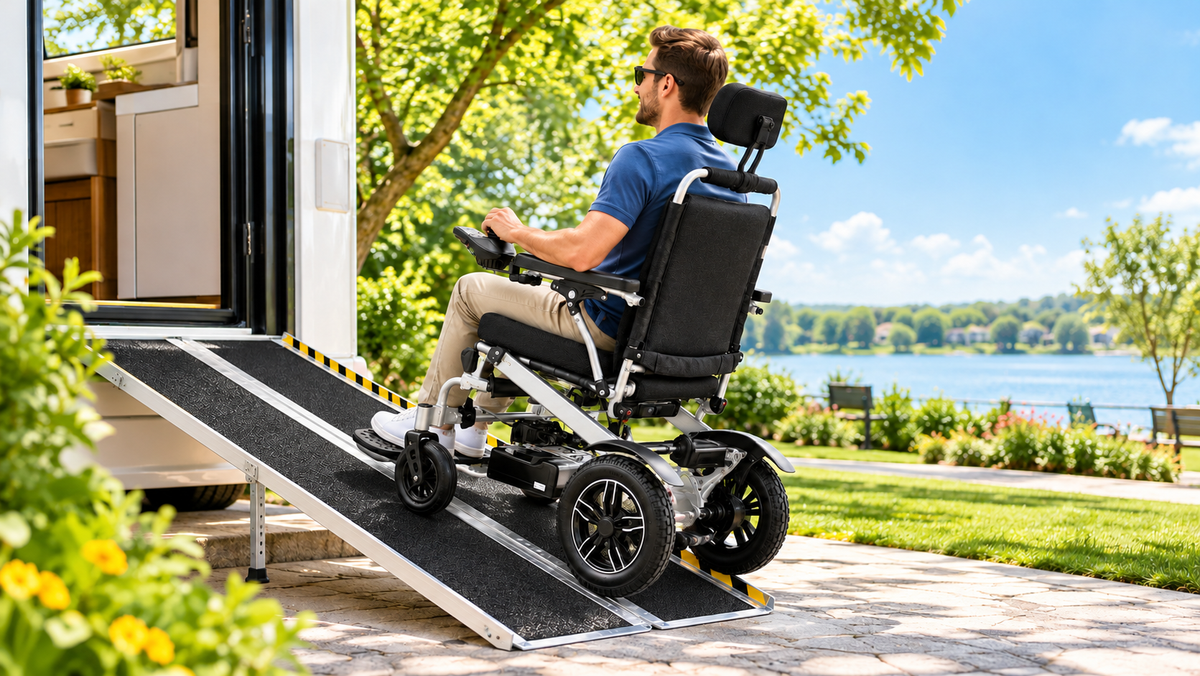
A portable wheelchair ramp can make it easier to navigate certain steps, raised doorways, and other changes in floor height. But choosing the right ramp involves more than finding one that fits your entrance. Ramp length, slope, weight capacity, surface traction, and stability all affect how well a ramp works for your mobility needs.
This guide explains how to choose a portable wheelchair ramp, compares folding ramps with threshold ramps, and highlights the measurements and safety features to check before buying.
1. What Is a Portable Wheelchair Ramp?
A portable wheelchair ramp is a movable ramp designed to bridge a height difference between two surfaces. Depending on its design and specifications, it may be suitable for home entrances, doorways, porches, or other access points.
Two common options are folding wheelchair ramps and threshold ramps. Folding ramps provide a longer access surface for suitable raised transitions, while threshold ramps are generally intended for smaller height differences. Choosing between them starts with measuring the location where the ramp will be used.
2. Types of Portable Wheelchair Ramps
Folding Wheelchair Ramps
Folding wheelchair ramps open into a longer access surface and fold for storage or transport. They can be useful when a suitable entrance has a height difference that requires a longer ramp, provided there is enough space for the ramp and its required slope.
The ProTraverse 7FT Portable Wheelchair Ramp features a folding design, aluminum alloy construction, adjustable support legs, and a stated weight capacity of 800 lb. Before choosing it, measure the height difference and available ground space, then check the manufacturer's instructions to confirm that its length and design suit your setup.
Wheelchair Threshold Ramps
Threshold ramps are designed to help bridge smaller height differences, such as raised door thresholds and compatible low transitions. They can help reduce the abrupt bump between surfaces when their dimensions match the entrance.
The ProTraverse Heavy-Duty Wheelchair Threshold Ramp features a textured rubber surface for compatible doorway and threshold applications. Measure the height and width of the threshold before purchasing, and verify that the product's dimensions and weight capacity meet your needs.
3. How to Choose the Right Wheelchair Ramp Length
Ramp length affects the slope between the lower and upper surfaces. A ramp that is too short for a particular height difference can create a steep incline that is difficult to navigate. The right length depends on the vertical rise, available space, mobility device, and whether the user will travel independently or with assistance.
Measure the Vertical Height
Measure the vertical distance from the lower surface to the top of the step or raised entrance. For a doorway, identify the actual height difference that the ramp needs to bridge. Do not estimate based on the appearance of the step alone.
Check the Required Slope
A longer ramp generally creates a gentler slope for the same vertical rise. However, the appropriate slope depends on the user's mobility needs, the mobility device, and applicable accessibility guidance. Follow the manufacturer's instructions and relevant accessibility recommendations rather than assuming that a particular ramp length will work for every entrance.
Measure the Available Ground Space
Measure the area in front of the entrance to confirm that the ramp can extend fully and rest securely. Check for obstacles, narrow walkways, doors that swing into the ramp area, and other conditions that could interfere with safe use.
Important: A 7-foot ramp is not automatically suitable for every step or entrance. Confirm the height difference, required slope, available space, and product specifications before choosing a ramp.
4. What to Look for When Buying a Portable Wheelchair Ramp
Weight Capacity
Check the manufacturer's stated weight capacity and account for the combined weight of the user, wheelchair or scooter, and any additional load. Never exceed the specified limit. Also verify that the ramp is designed for your type of mobility device and intended application.
Surface Traction
A textured or slip-resistant surface can help improve traction when entering or leaving a ramp. Consider whether the ramp will be used indoors or outdoors and follow the manufacturer's guidance for wet conditions, cleaning, and maintenance.
Support and Stability
Some folding ramps feature support legs or other structural support components. Make sure all required supports are correctly positioned and that the ramp rests securely at both ends. Do not use a ramp that shifts, rocks, or cannot be positioned according to its instructions.
Width and Mobility Device Compatibility
Check the usable ramp width against the overall width and wheel configuration of your wheelchair or scooter. Make sure the ramp provides adequate clearance and that its connection points are compatible with the upper and lower surfaces.
Portability and Storage
If you need to move the ramp regularly, consider its folded dimensions, weight, carrying method, and setup requirements. A folding ramp may be practical when a longer access surface is needed, while a compact threshold ramp may be easier to position at a compatible doorway lip.
5. Portable Folding Ramp vs. Threshold Ramp
Folding ramps and threshold ramps solve different access problems. Use the following comparison to narrow down your options before checking individual product specifications.
| Feature | Folding Wheelchair Ramp | Threshold Ramp |
|---|---|---|
| Typical application | Suitable raised transitions where a longer ramp is required | Door thresholds and compatible small height differences |
| Design | Longer access surface that folds for storage or transport | Compact ramp designed for a specific threshold or transition |
| Key measurement | Vertical rise, ramp length, slope, and available ground space | Threshold height, ramp dimensions, and available clearance |
| Important checks | Support, stability, width, and weight capacity | Fit, surface traction, stability, and weight capacity |
For a folding option, explore the ProTraverse 7FT Folding Wheelchair Ramp. For a compatible low-height transition, see the ProTraverse Rubber Threshold Ramp. Always check the product dimensions and instructions before deciding which option fits your entrance.
6. How to Use a Wheelchair Ramp Safely
- Inspect the ramp for damage, wear, or loose components before each use.
- Position the ramp according to the manufacturer's instructions and check that it is stable at both ends.
- Use all required supports and securement features.
- Confirm that the ramp's weight capacity, width, and design are suitable for the user and mobility device.
- Keep the surface clear of debris and follow the manufacturer's instructions for wet or slippery conditions.
- Do not use a ramp at a height difference or slope beyond its specified limits.
- Seek assistance when needed, especially when navigating unfamiliar or steep transitions.
7. Frequently Asked Questions
How do I choose a portable wheelchair ramp for home use?
Start by measuring the vertical height difference and the available ground space. Then consider the ramp's required slope, weight capacity, usable width, and compatibility with your mobility device. A folding ramp may suit certain raised transitions, while a threshold ramp is generally intended for smaller height differences.
How long should a portable wheelchair ramp be?
The appropriate length depends on the vertical rise, the slope recommended for the intended use, and the available space. Measure the entrance and consult the manufacturer's guidance before selecting a ramp. Do not assume that one length is suitable for every step.
Can a threshold ramp be used for stairs?
Threshold ramps are generally designed for door lips and small height differences, not a flight of stairs. For steps, choose a ramp specifically designed and rated for that application, and verify the required length, slope, and installation requirements.
What weight capacity should a wheelchair ramp have?
The stated capacity must accommodate the combined weight of the user, wheelchair or scooter, and any additional load. Check the manufacturer's specifications and never exceed the rated limit.
Can portable wheelchair ramps be used outdoors?
Some portable ramps are suitable for specific outdoor applications, but outdoor use depends on the product's materials, surface, weather exposure, stability, and installation requirements. Check the manufacturer's instructions before using a ramp outdoors.
Conclusion
Choosing the right portable wheelchair ramp starts with measuring the height difference and available space. Ramp length, slope, weight capacity, surface traction, and stability all help determine whether a ramp is suitable for a particular entrance.
If you need a folding access option for a suitable raised transition, explore the ProTraverse 7FT Folding Wheelchair Ramp. If you need to bridge a compatible low-height doorway transition, consider the ProTraverse Rubber Threshold Ramp. Review each product's specifications and instructions to choose an option that matches your home and mobility needs.
Share:
How to Choose an Electric Wheelchair: A Complete Buying Guide for Seniors & Adults