
Product Alias: WE02S
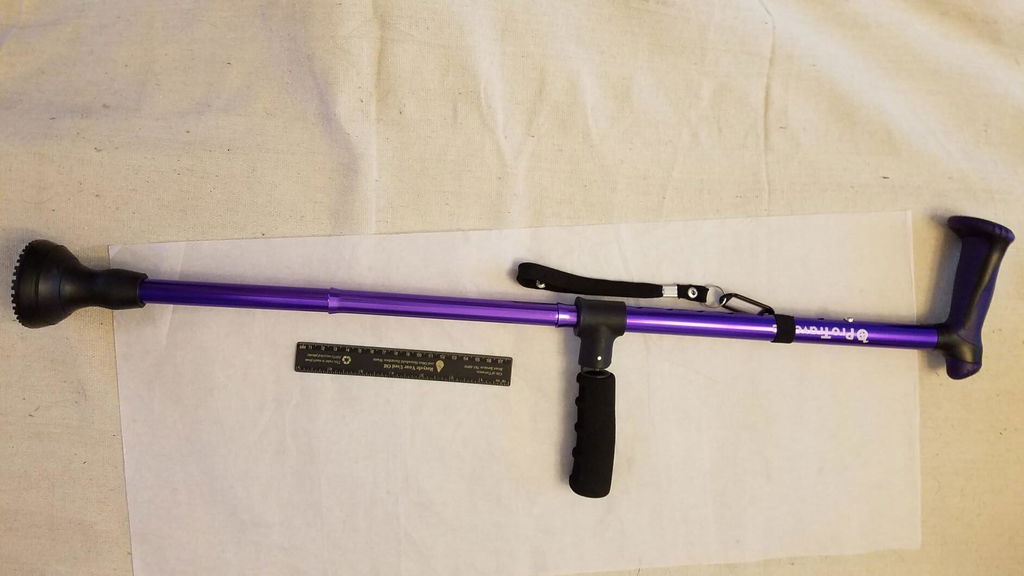
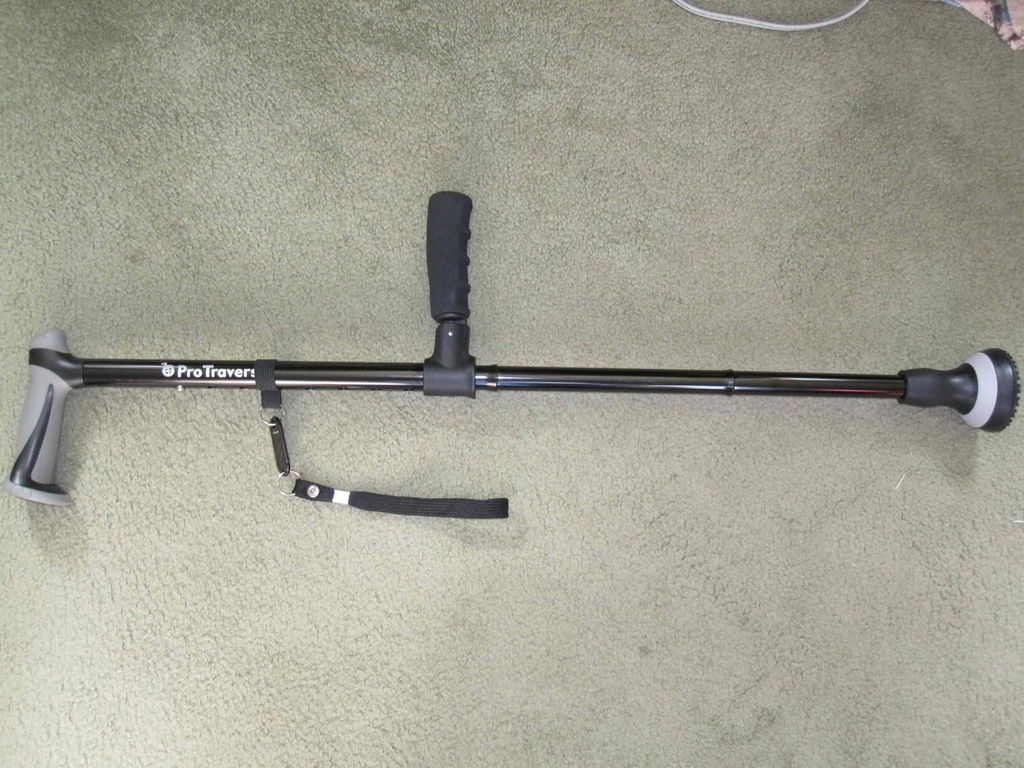
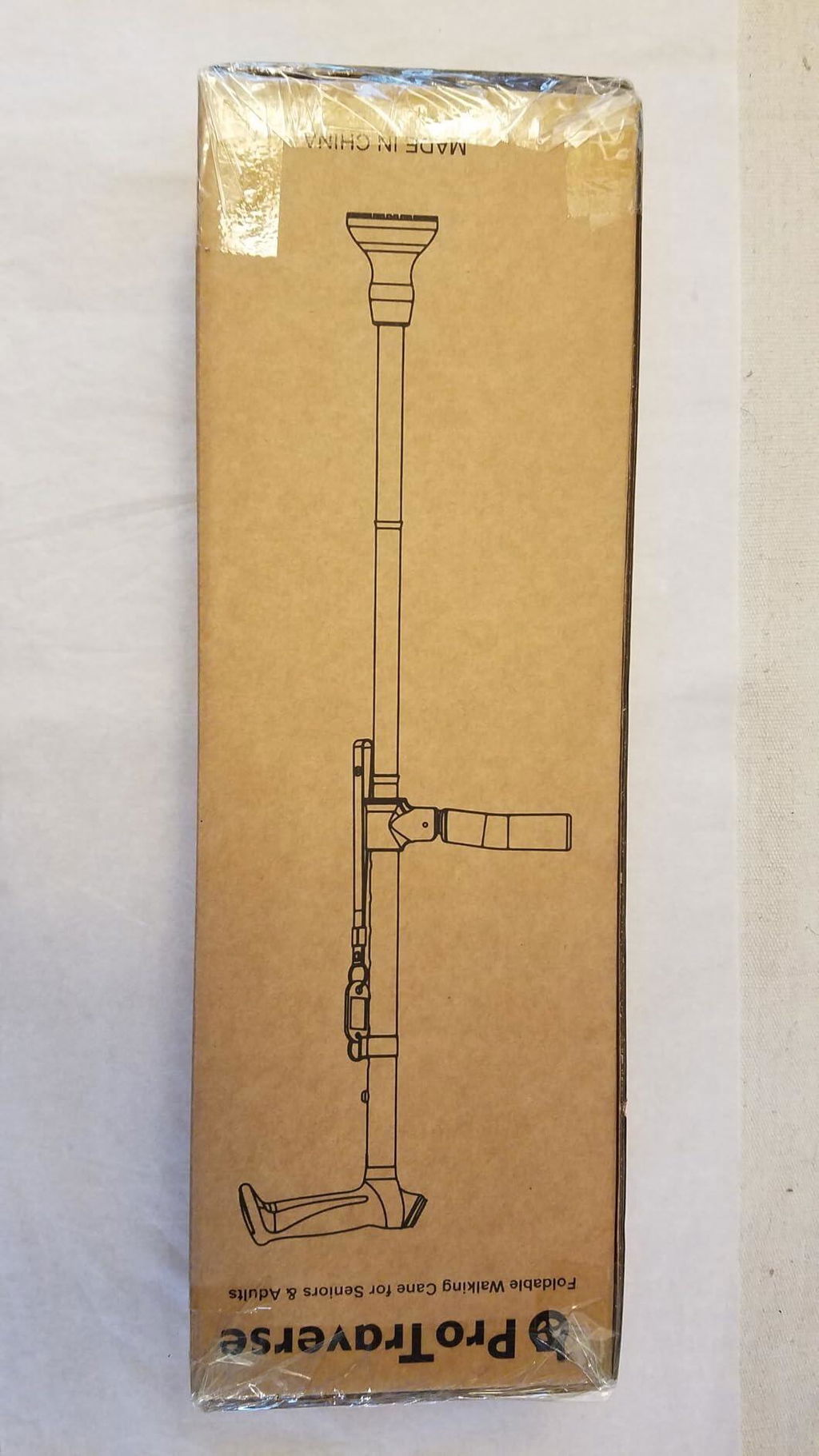
Lightweight Folding Walking Cane for Seniors with Side Support Handle
Pairs well with
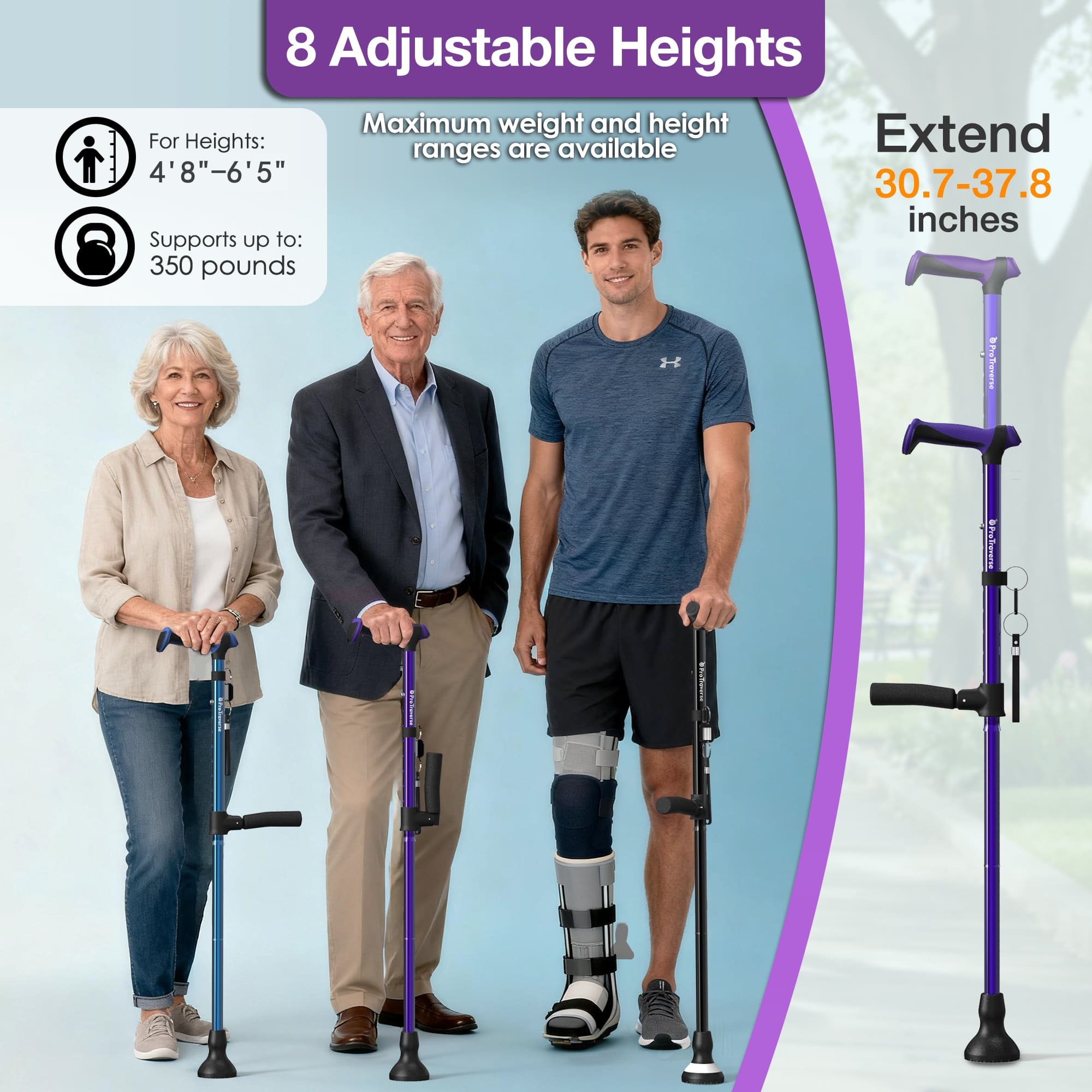
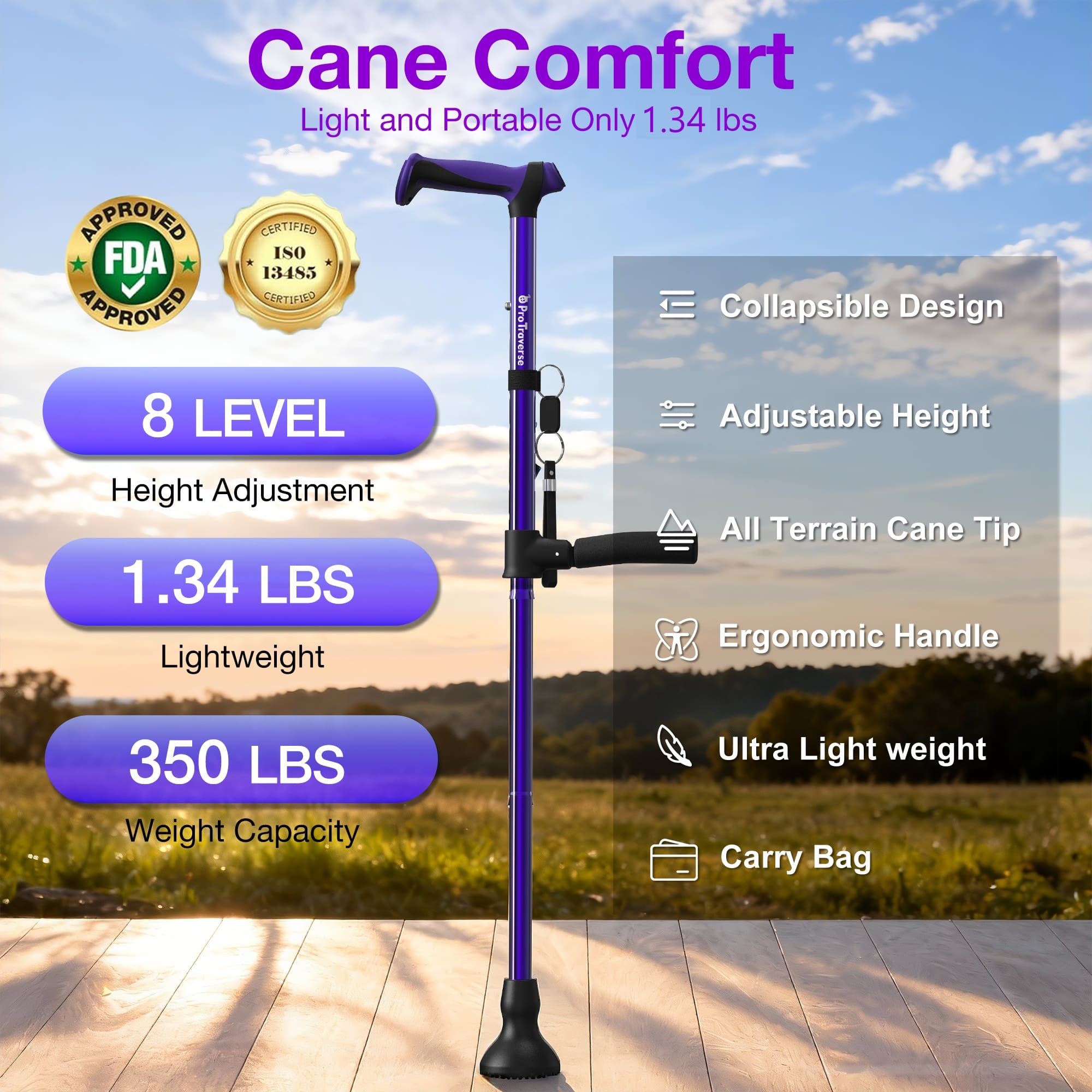
📌 Lightweight Design: Easy to carry and stable for daily support 350lbs.
📏 8 Height Levels: Adjustable from 30.7”–37.8”, fits users 4'8"–6'5".
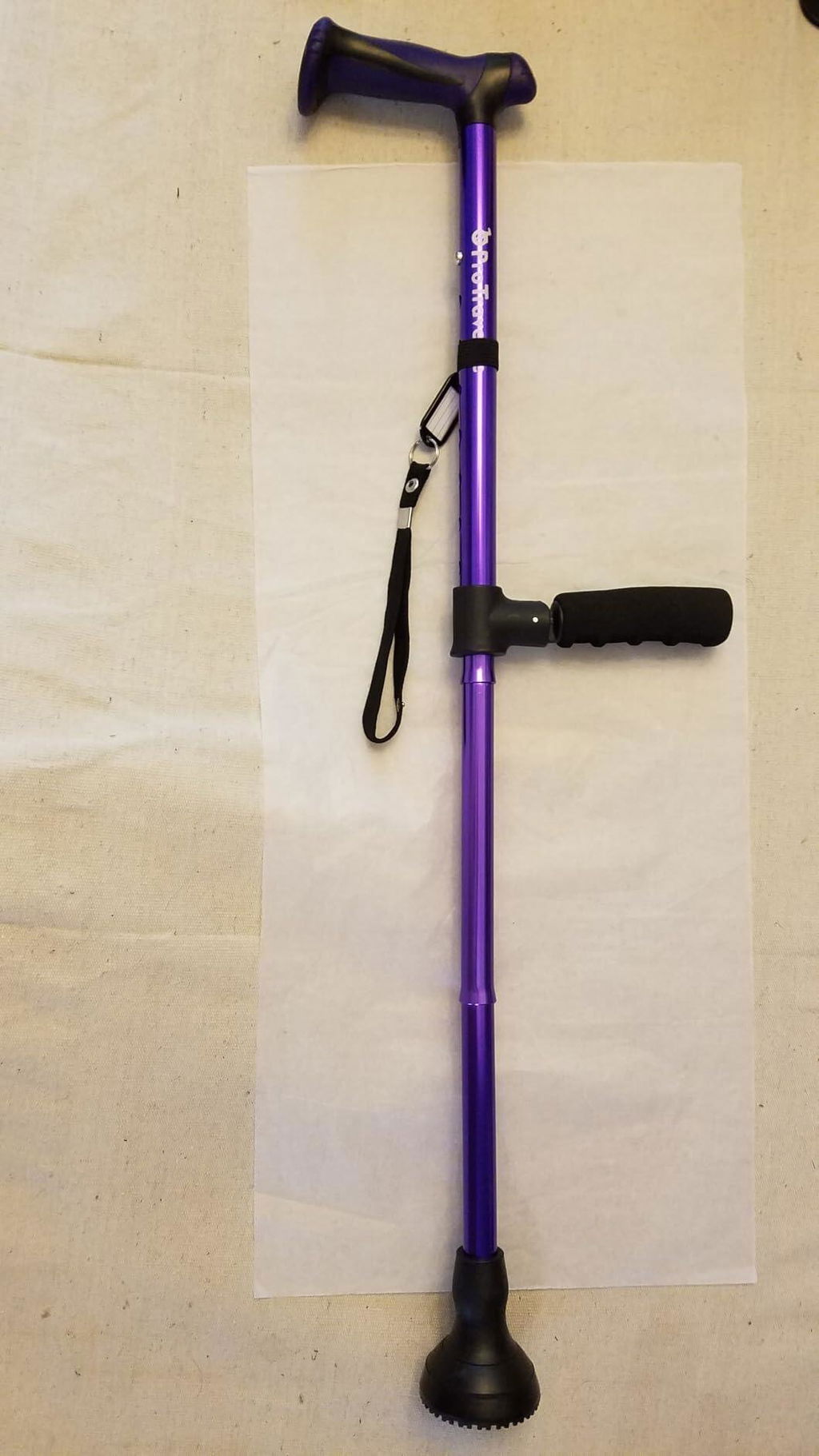
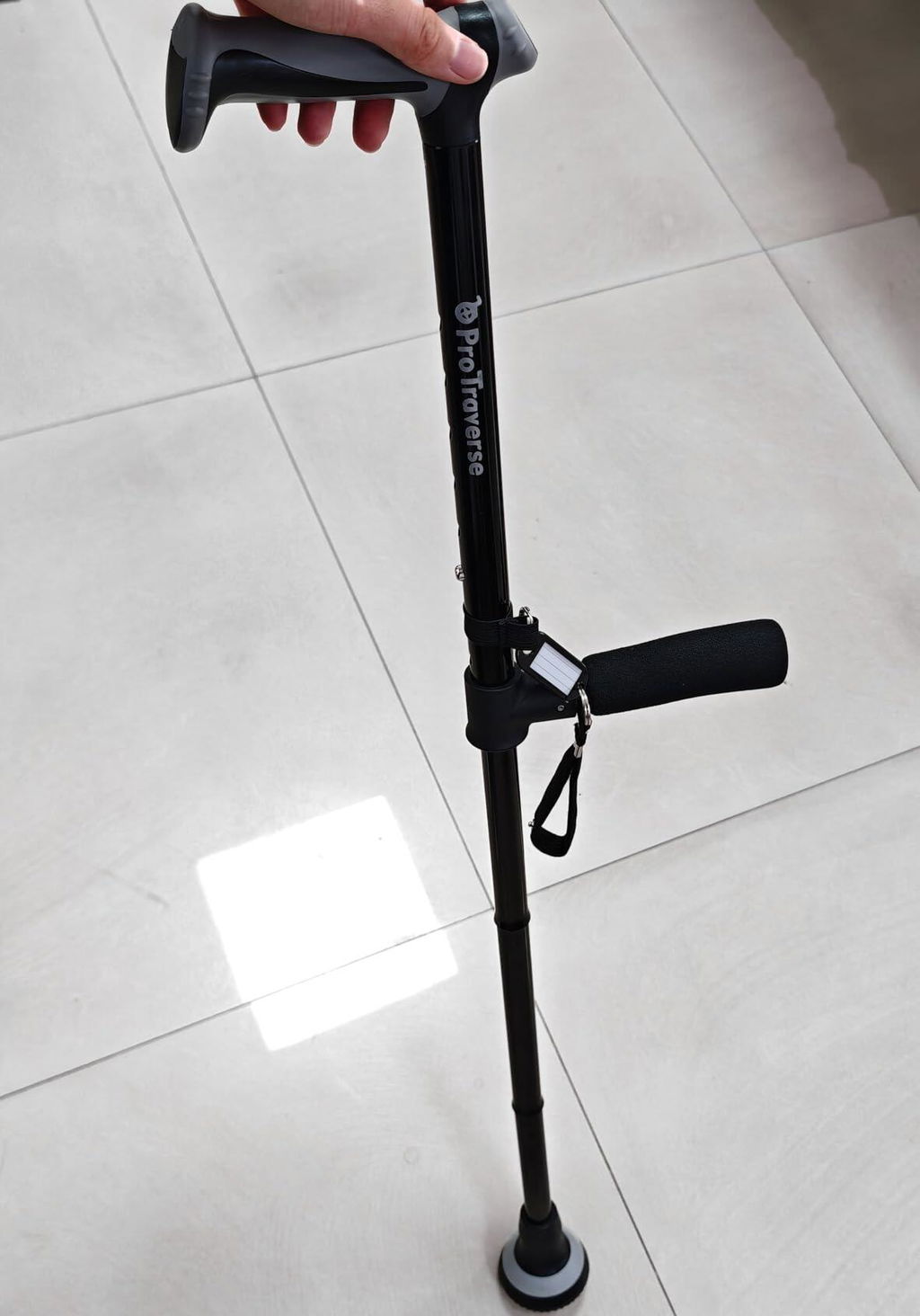
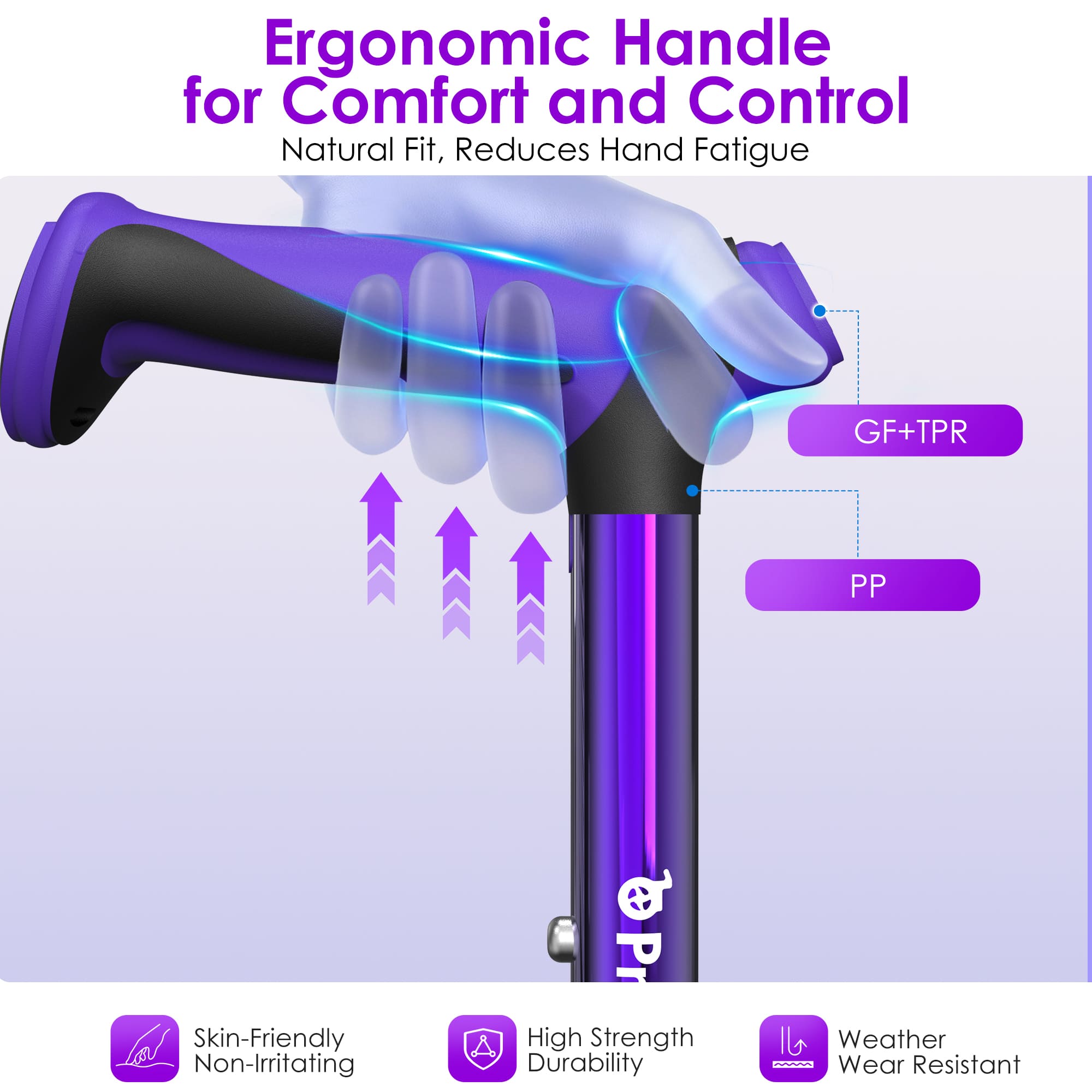
✋ Dual Support Handle: Main grip with side assist handle for easier standing.
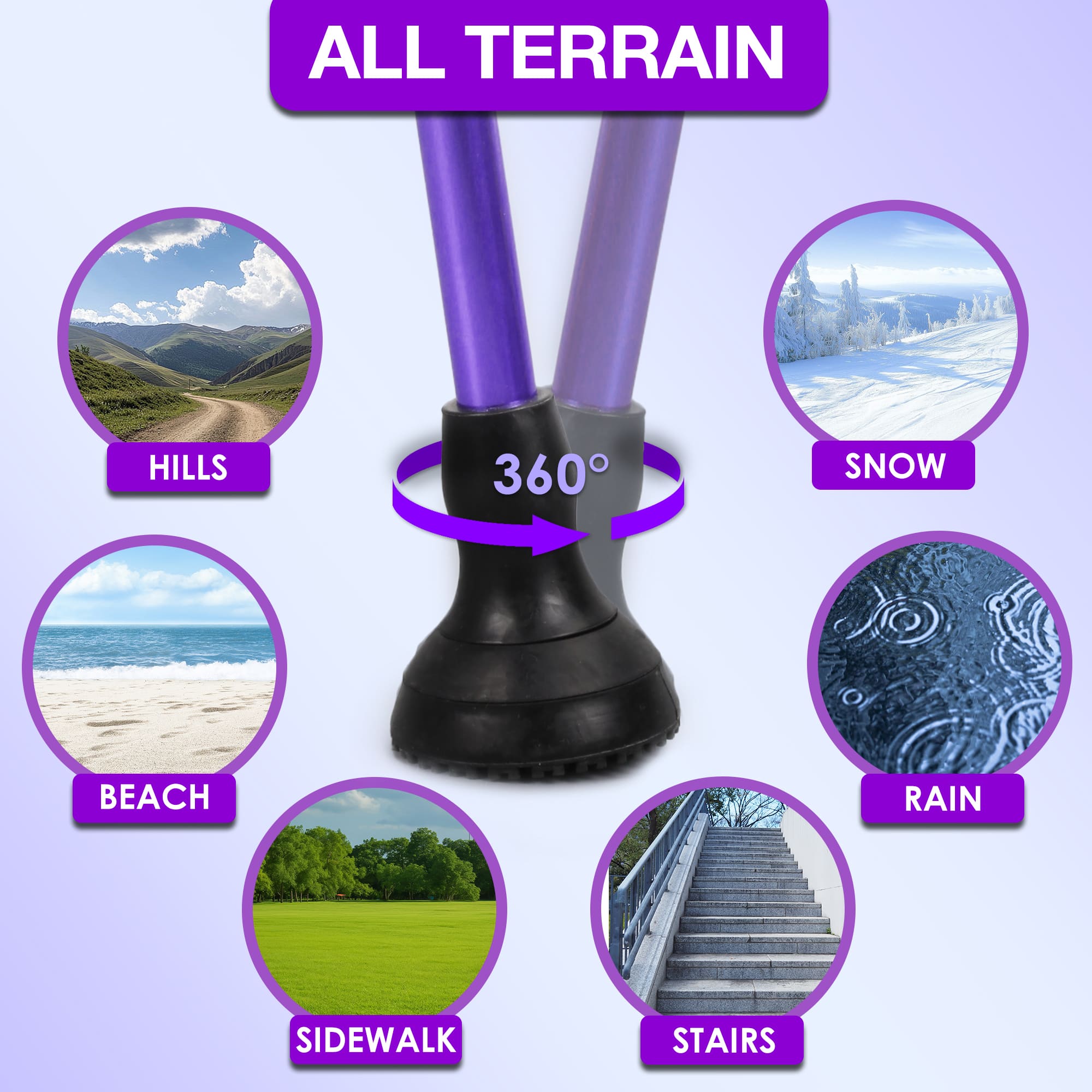
🌍 360° Pivot Base: Non-slip base adapts to uneven and smooth surfaces.
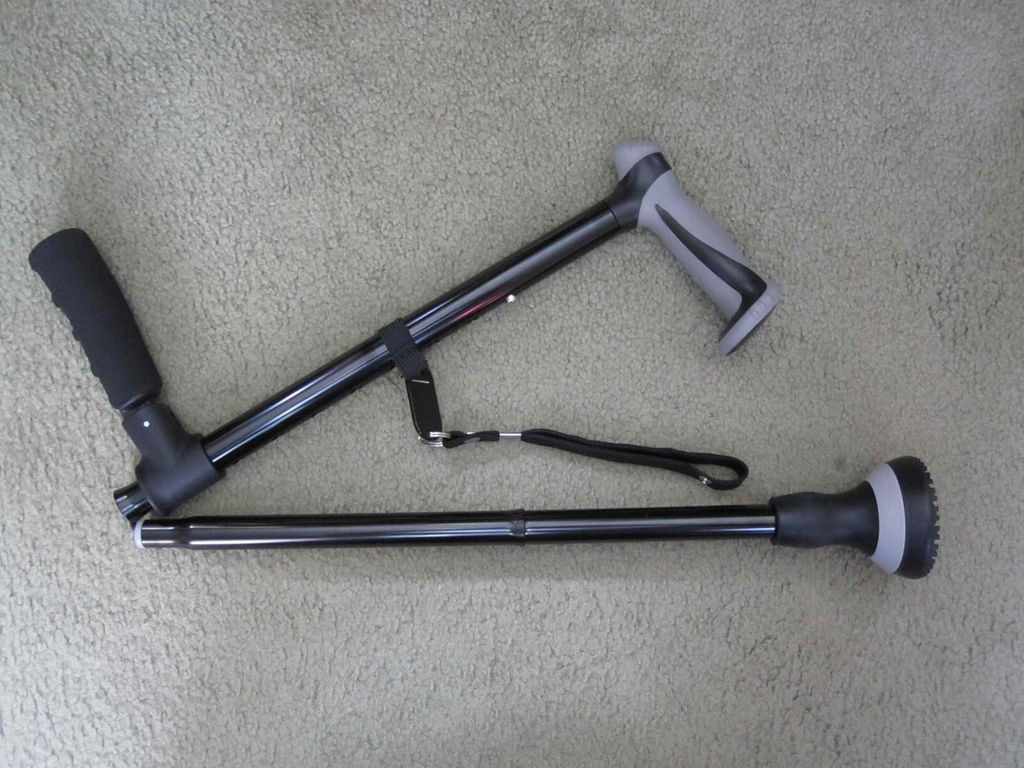
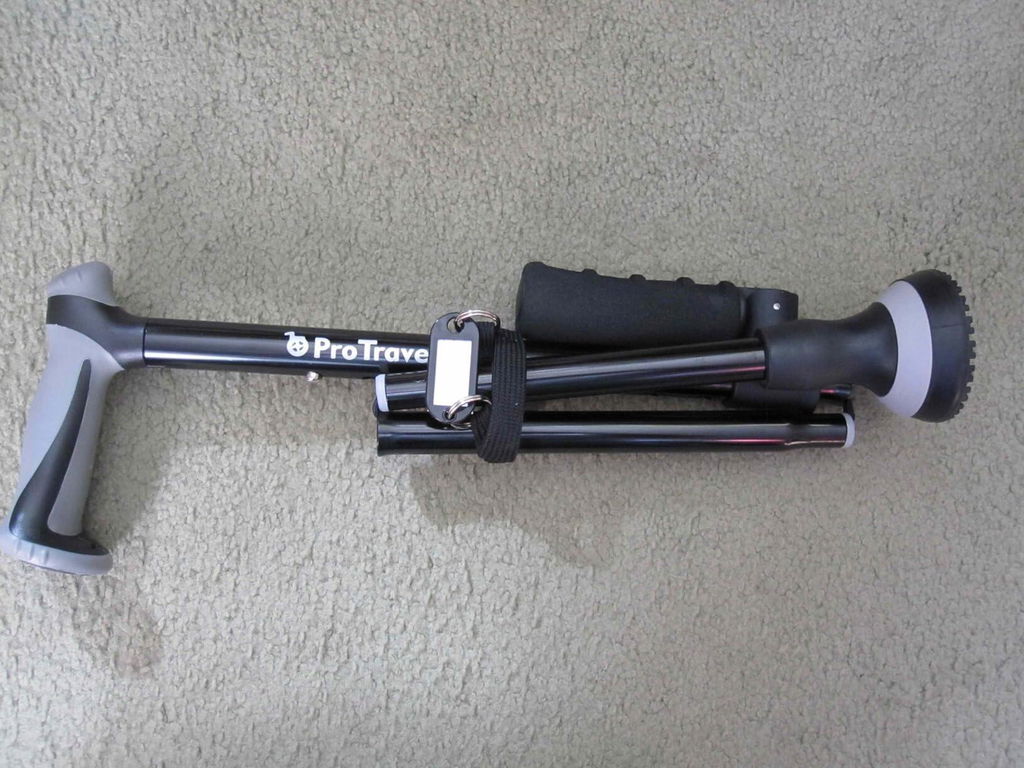
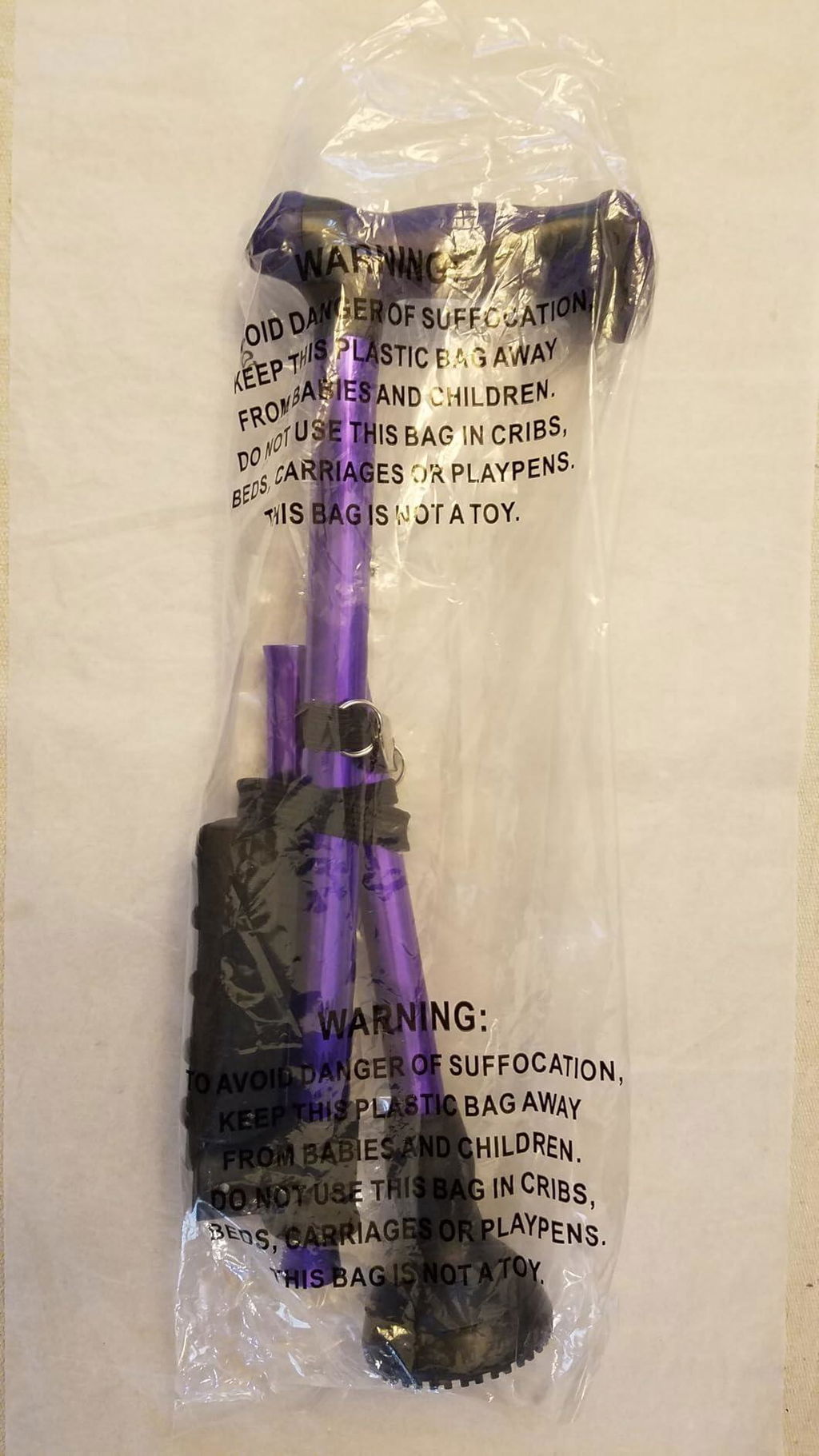
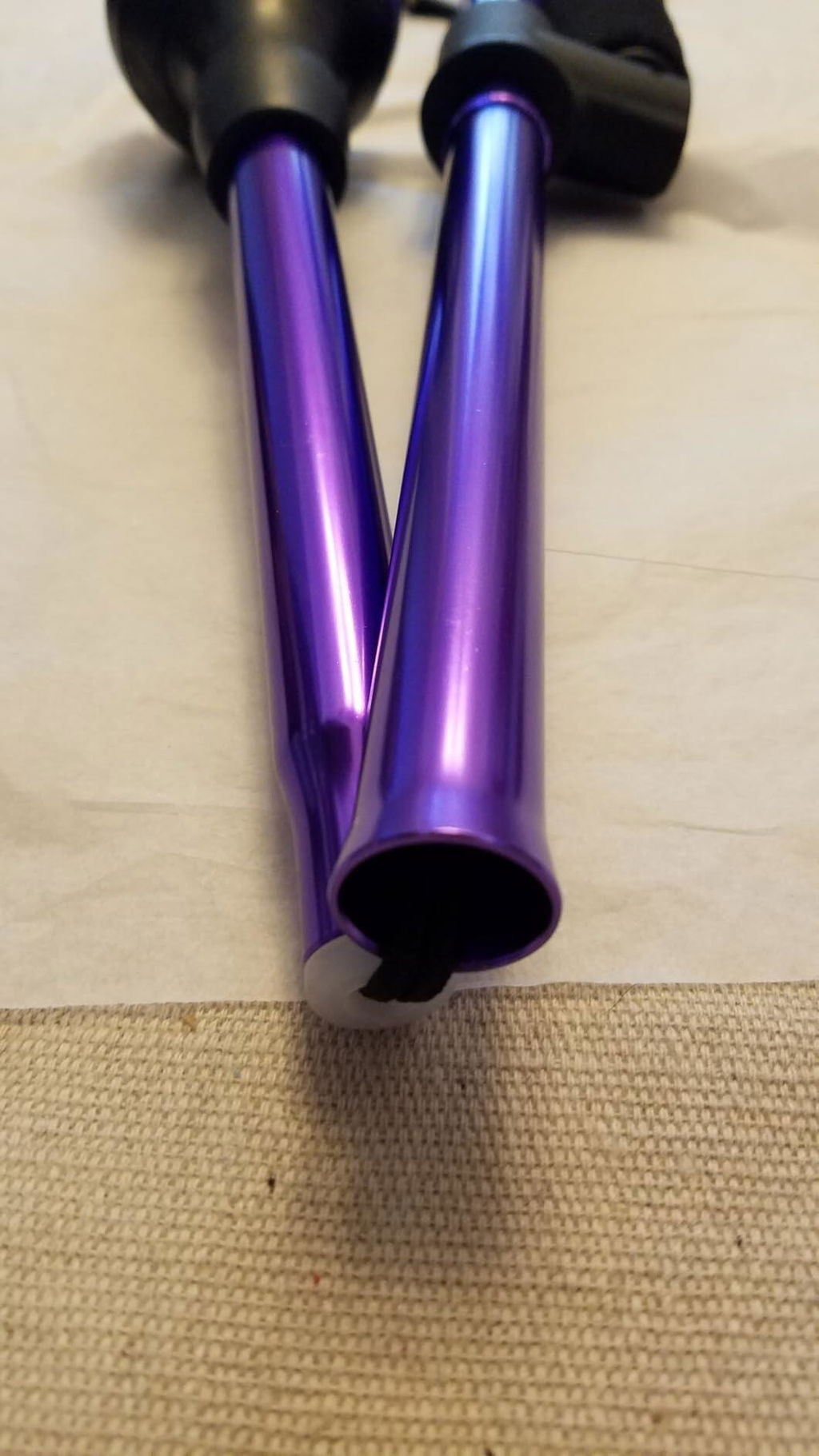
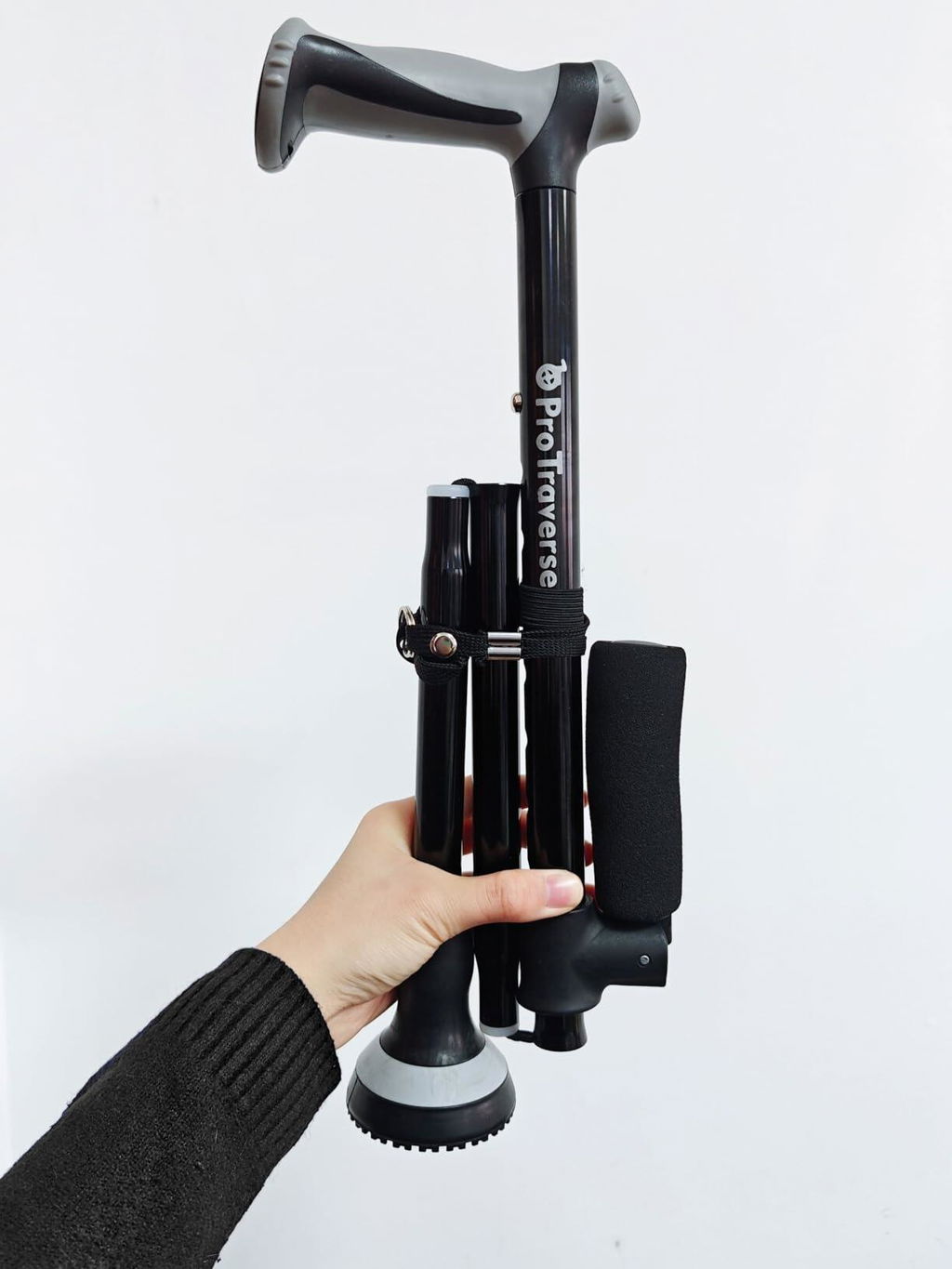
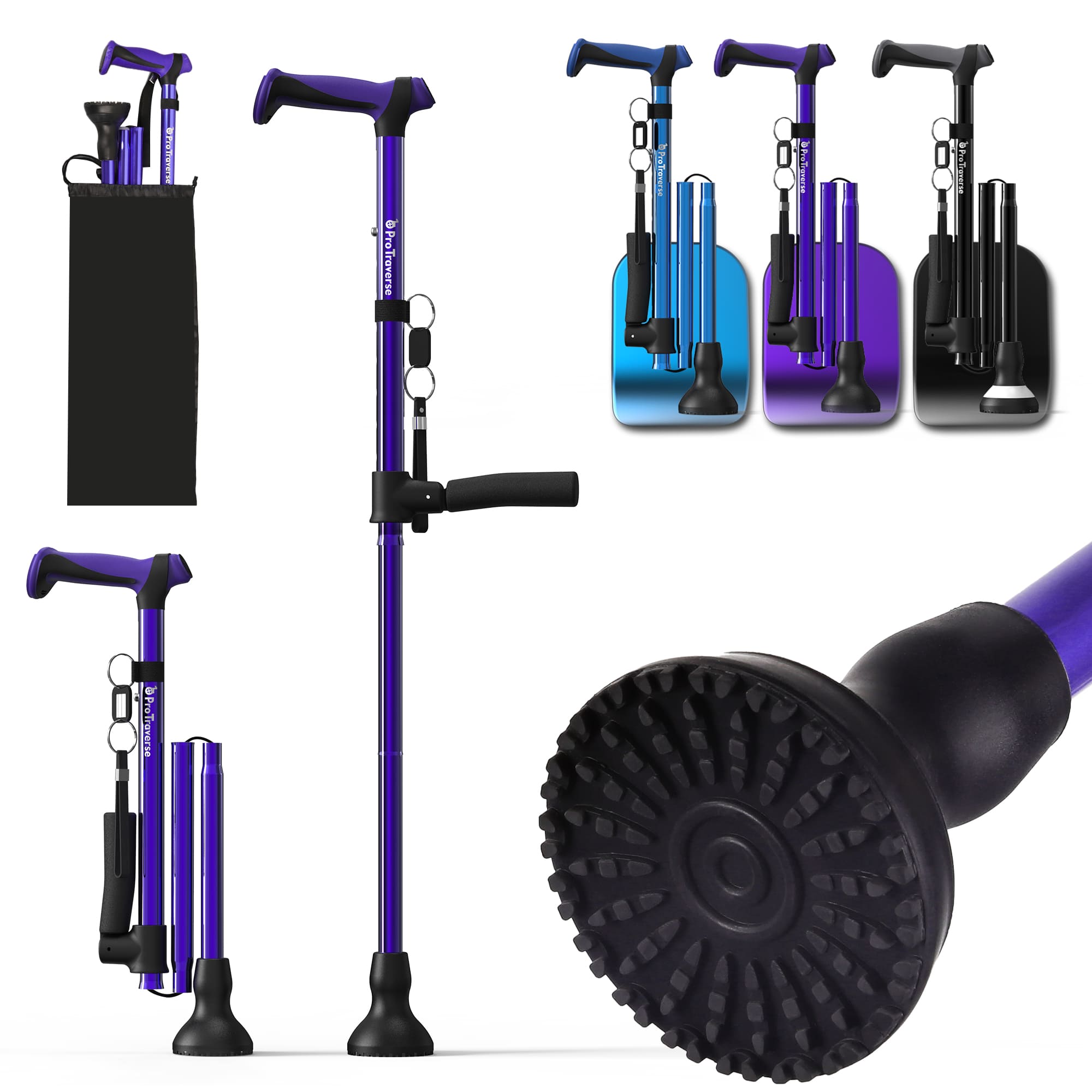
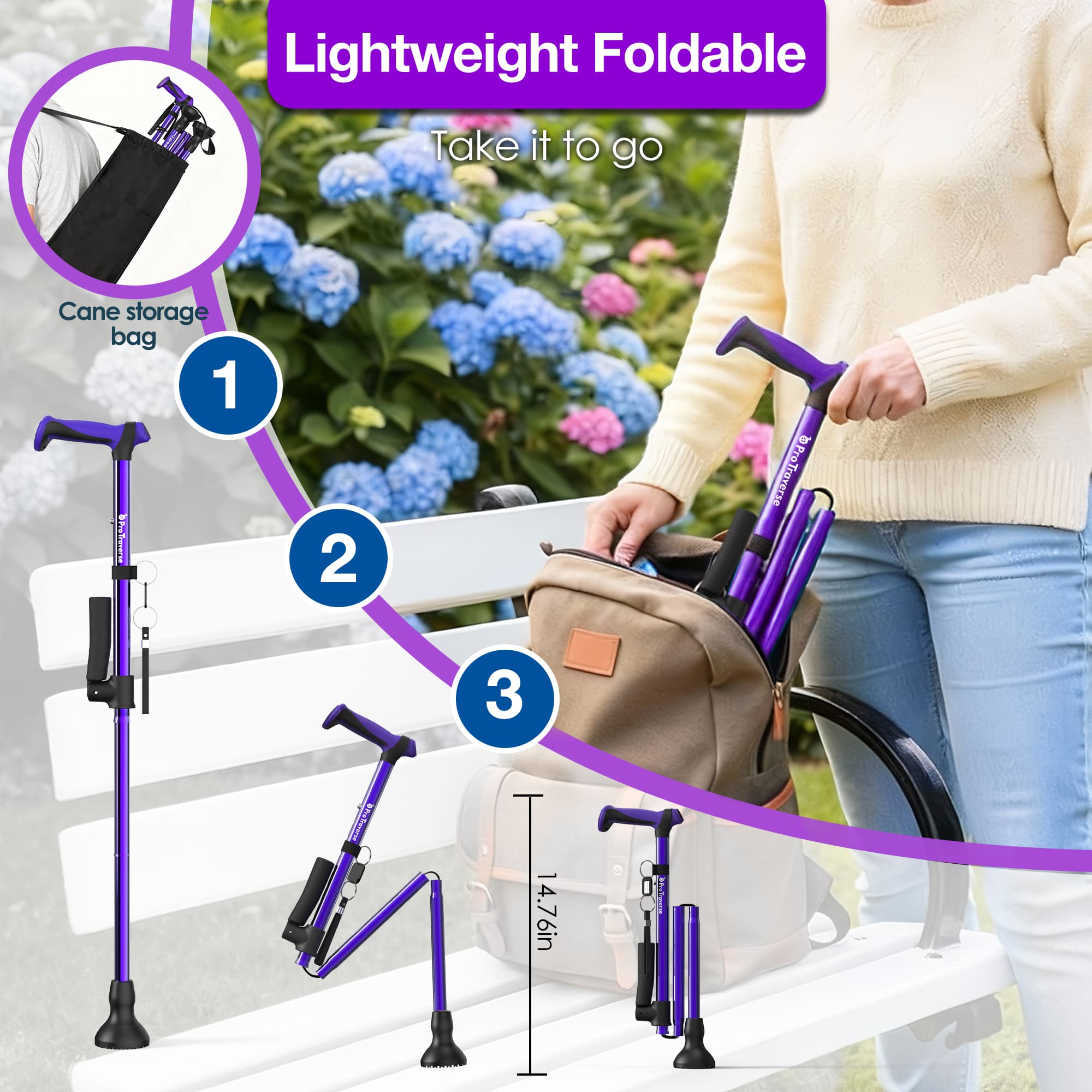
🎒 Foldable & Compact: Lightweight folding design for travel and storage.
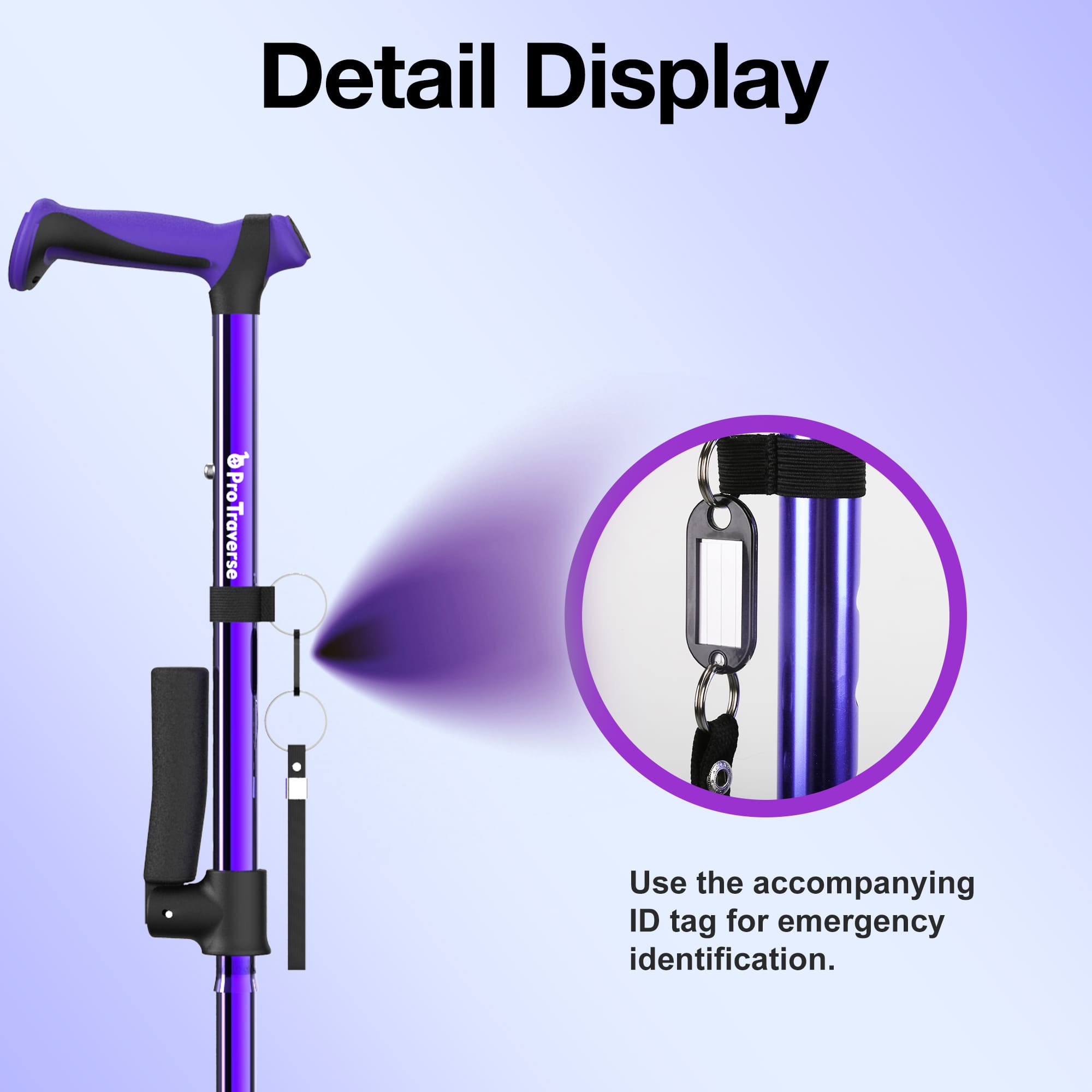
💡 Added Security: Includes wrist strap and emergency ID tag.
In stock! Ships within 3-7 business days.
30-day risk-free trial
1-Year Warranty
Product Specifications
Brand: ProTraverse
Material: Aluminum Alloy
Weight: 1.34 lbs
Product Dimensions: 5.11"W x 37.8"H
Product Features
- Sturdy Yet Lightweight Construction: Crafted from durable aluminum alloy, this walking cane weighs only 1.34 lbs while supporting up to 350 lbs. The reinforced 1.3 mm thick tube enhances stability, making it a dependable mobility aid for seniors and adults needing reliable balance support.
- Adjustable Height for Personalized Fit: Designed with 8 adjustable height levels from 30.7” to 37.8”, this foldable walking cane comfortably fits users approximately 4'8"–6'5", allowing easy customization for proper posture and comfortable daily walking support.
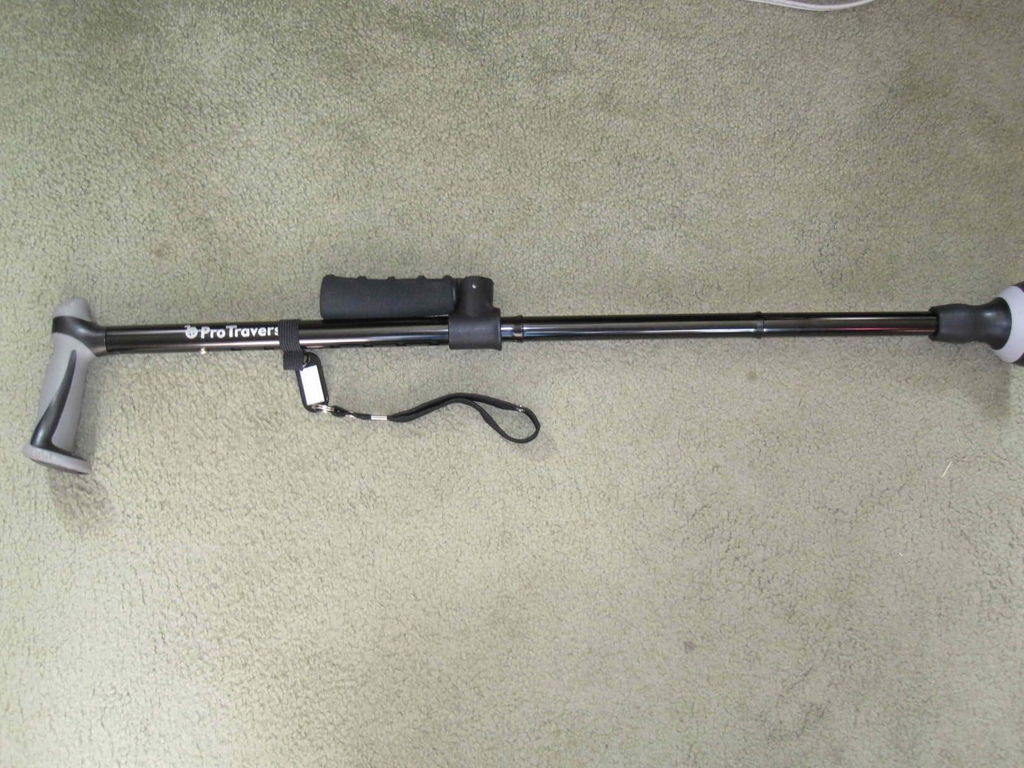
- Dual Handle Assist for Easier Standing: Featuring an ergonomic dual-handle design, the upper rubber grip offers a secure non-slip hold for walking, while the lower foam-padded support handle helps users stand up from low seats, sofas, or chairs with greater stability and confidence.
- All-Terrain Anti-Slip Stability: The 360° swivel rubber base with a textured bottom provides excellent traction on wet, dry, uneven, or smooth surfaces, helping reduce slips while walking on sidewalks, slopes, and indoor floors.
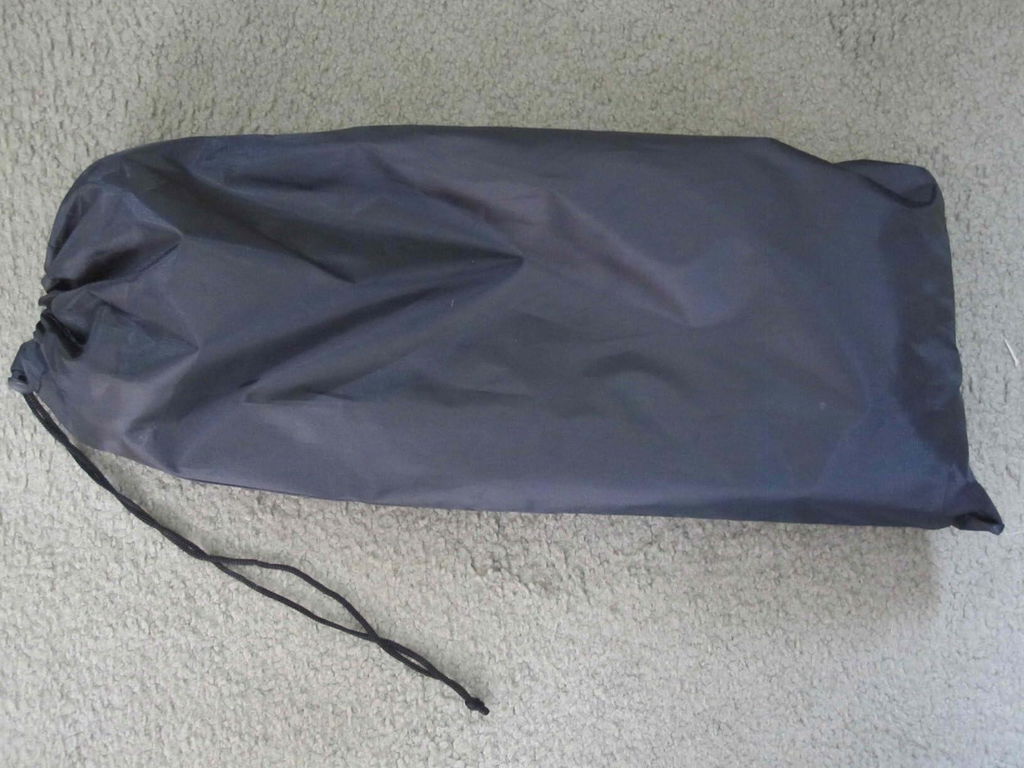
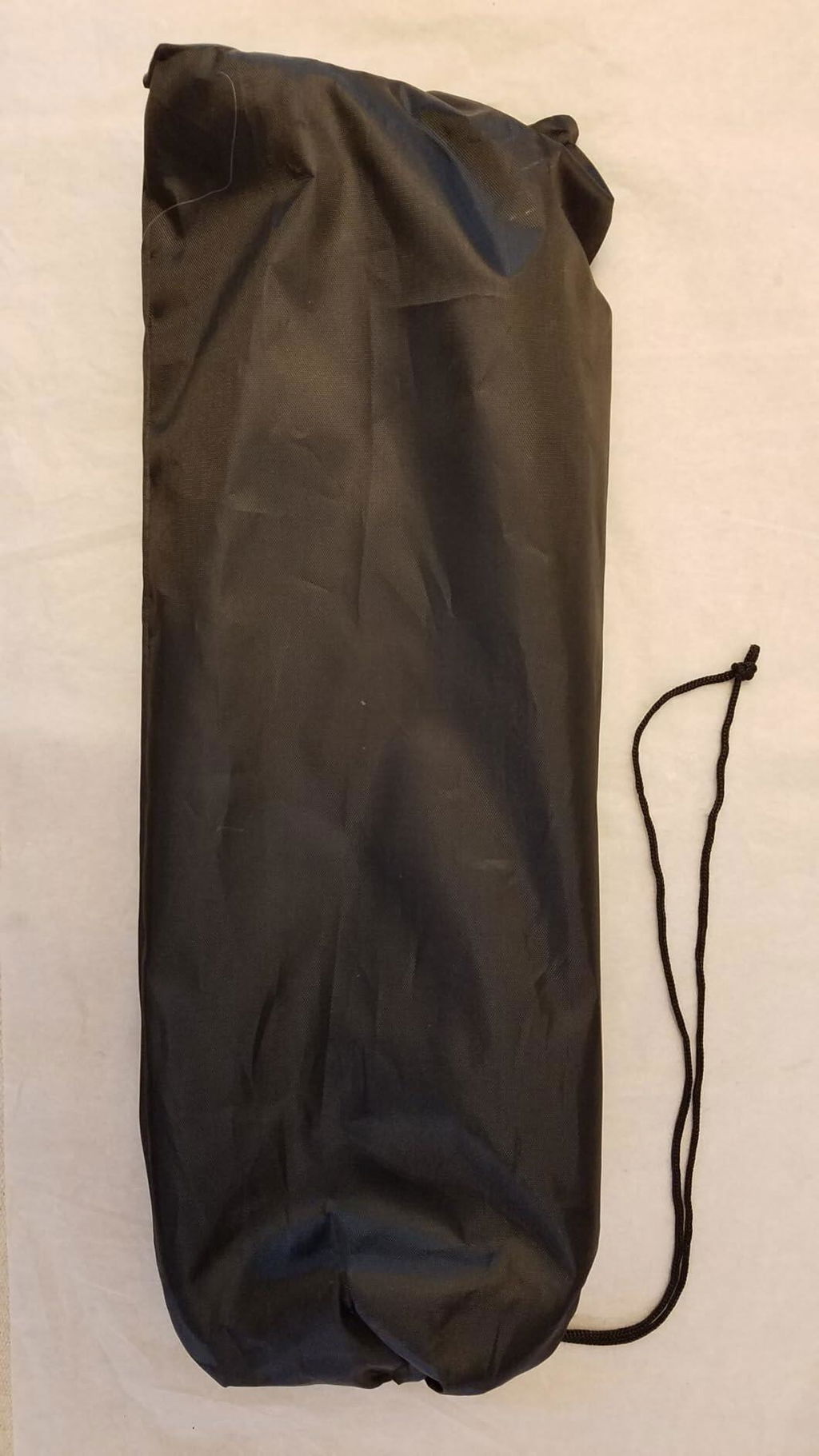
- Foldable, Portable & Travel Ready: This lightweight walking cane folds in seconds for convenient storage in bags, drawers, or car trunks. A secure wrist strap prevents accidental drops, while the included emergency ID tag adds extra safety for daily mobility and travel.
Shipping, Warranty & Support
We’re here to make your experience as smooth and worry-free as possible — from delivery to after-sales support.
• Fast & Reliable Shipping – Most orders are processed within 1–3 business days and shipped with reliable carriers. You can view our Shipping Policy for more details.
• Warranty Coverage – Most ProTraverce mobility products include a 1-year limited warranty, with extended coverage available on select products. If you experience a covered quality issue, our team will work with you to provide replacement parts, repair support, or another appropriate solution.
• Easy Returns & Exchanges – We understand that choosing the right mobility product is important. Eligible products may be returned or exchanged according to our Returns & Exchanges Policy. Please review the policy for eligibility, time limits, and product condition requirements.
• Local Pickup Available – Customers near our California warehouse can contact us to arrange local pickup. Eligible pickup orders can have the shipping fee waived.
ProTraverce California Warehouse:211 Erie St, Pomona, CA 91768
• Customer Support – Have questions before or after your purchase? Our support team is here to help with product selection, orders, setup, and after-sales support. Contact us at Protraverse@outlook.com. We typically respond within 24 hours.
If you have any questions, feel free to contact us at anytime!
-
Contact Us
Email: Protraverse@outlook.com
Product Details


You May Also Like


FAQs
How do I choose the right walking cane?
Choosing the right walking cane depends on your height, balance needs, and daily environment. Most seniors and adults benefit from a lightweight, adjustable walking cane made from aluminum or carbon fiber because it is durable and easy to carry. Adjustable canes are often recommended since they can fit a wide range of users and walking conditions, whether at home, outdoors, or during travel. Features like ergonomic handles, non-slip tips, and foldable designs also improve comfort and stability for everyday mobility support.
What is the correct height for a walking cane?
The correct walking cane height should align with the crease of your wrist when you stand upright with your arms relaxed at your sides. When holding the cane, your elbow should bend slightly—usually around 15–20 degrees—which helps maintain natural posture and balance while walking. If a cane is too short, it can cause leaning and discomfort, while a cane that is too tall may reduce stability and require extra effort to use. Many adjustable walking canes are designed to fit a wide range of users and allow quick height customization for safer everyday mobility.
Which hand should you use a walking cane in?
A walking cane should usually be held in the hand opposite your weaker or injured leg. This allows the cane and the stronger leg to support your weight together while walking, improving balance and reducing stress on the affected side. Using the cane correctly can help maintain a more natural walking pattern and improve stability during daily movement.
When should someone start using a walking cane?
People typically start using a walking cane when they experience mild balance issues, reduced stability, or temporary weakness due to injury or aging. Canes are commonly used by seniors, rehabilitation patients, and individuals recovering from surgery or joint problems. However, a cane usually supports only about 25% of body weight, so people who need more support may benefit from a walker instead.
What features should I look for in a high-quality walking cane?
A high-quality walking cane should combine stability, comfort, and convenience for everyday mobility. Important features include adjustable height for proper fit, lightweight materials like aluminum for easier handling, and a durable anti-slip rubber tip that grips both indoor floors and outdoor surfaces. Many modern walking canes also include ergonomic handles to reduce hand fatigue and foldable designs for travel or storage. Safety accessories such as wrist straps or identification tags can add extra security, especially for seniors who rely on a cane for daily independence.