

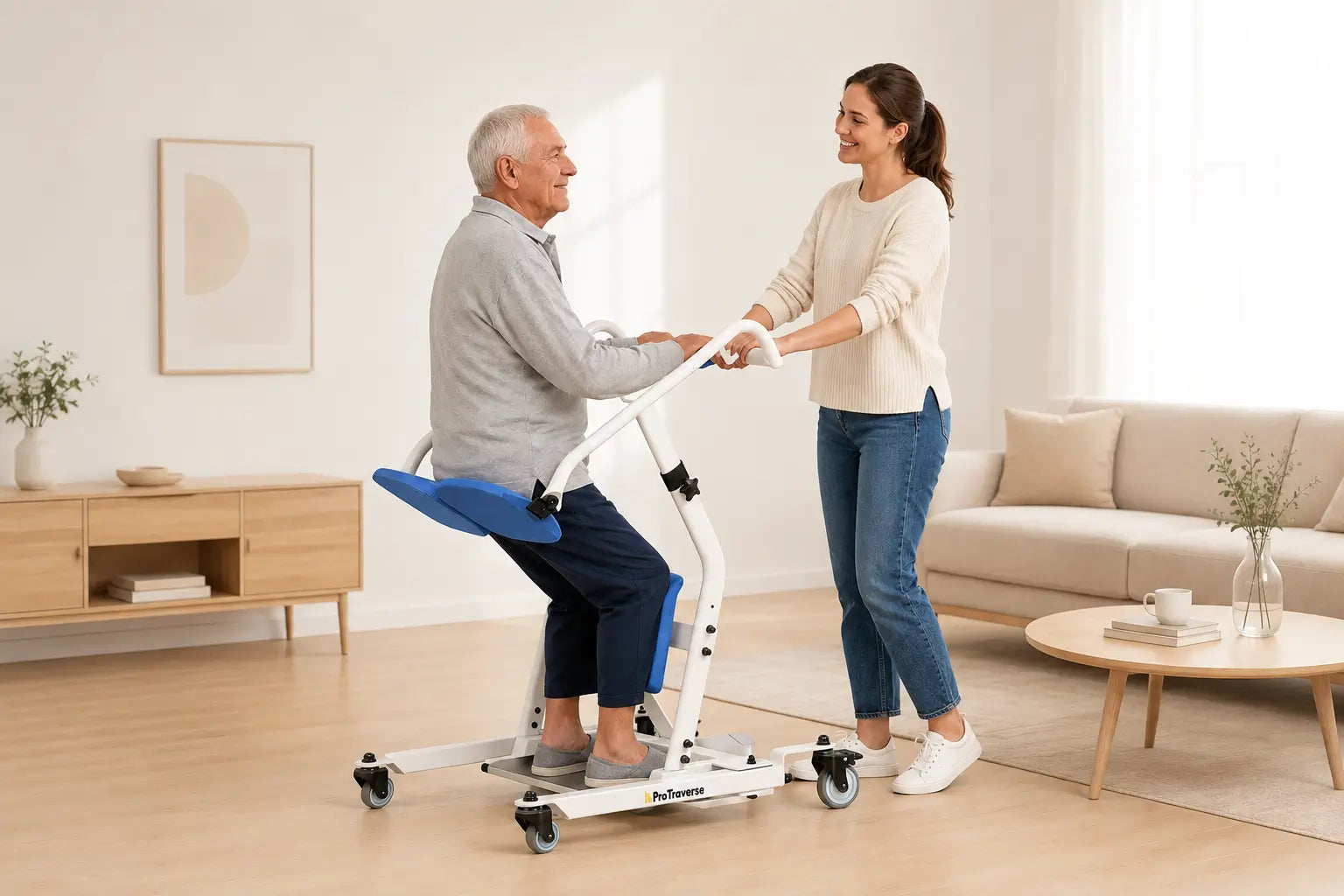
As mobility challenges increase due to aging, surgery recovery, or disability, everyday movements like standing up become difficult. Sit-to-stand lift chairs provide a safe and reliable solution that restores independence and reduces caregiver strain.
What Is a Sit-to-Stand Lift Chair?
A sit-to-stand lift chair is a mobility assistance device designed to help individuals transition safely from sitting to standing. Unlike traditional chairs or wheelchairs, it provides active lifting support while maintaining balance and stability.
It is commonly used by:
- Seniors with reduced muscle strength
- Post-surgery patients (hip, knee, or spine recovery)
- Individuals with neurological conditions
- People with arthritis or chronic mobility issues
- Caregivers assisting dependent users
These devices encourage partial user participation, helping maintain muscle strength and long-term mobility.
If you are exploring different mobility solutions, you can view more related products in our transfer and lifting aids collection.

Why Sit-to-Stand Lifts Are Important in Home Care
Reducing Fall Risk
Falls are one of the leading causes of injury among older adults. A sit-to-stand lift provides controlled and stable movement, significantly reducing fall risk.
Protecting Caregivers
Manual lifting can cause serious back injuries. Lift chairs reduce physical strain and improve safety for caregivers.
Supporting Recovery
For rehabilitation patients, controlled movement helps improve circulation, strength, and confidence during recovery.
Enhancing Independence
Being able to stand and move independently improves emotional well-being and quality of life.
Key Features of a High-Quality Stand Assist Lift Chair
Stable Frame Construction
Heavy-duty steel frames ensure stability and long-term durability, even under high weight capacity conditions.
Ergonomic Design
Padded supports and ergonomic handles improve comfort and reduce pressure during transfers.
Adjustability
Height-adjustable frames allow customization for different users and care environments.
Lockable Wheels
Mobility casters with locking systems ensure safe positioning during transfers.
Home-Friendly Design
Compact structure allows use in bedrooms, living rooms, and bathrooms without taking excessive space.
Featured Product: ProTraverse Stand Assist Lift Chair

The ProTraverse Stand Assist Lift Chair is designed to provide safe, stable, and comfortable mobility assistance for home care users.
- Supports up to 400 lbs weight capacity
- Dual padded leg support system
- Ergonomic handrails for secure grip
- Adjustable height settings
- 360° swivel wheels with locking brakes
- Compact design suitable for home environments
This design helps reduce pressure on sensitive areas while ensuring smooth and safe transfers between bed, chair, or wheelchair.
Who Should Use a Sit-to-Stand Lift Chair?
Elderly Users
Supports aging individuals with reduced strength and balance.
Post-Surgery Patients
Ideal for hip, knee, or spine recovery requiring controlled movement.
Neurological Conditions
Helps individuals with Parkinson’s disease, stroke recovery, or MS.
Long-Term Care Patients
Provides consistent daily support for chronic mobility limitations.

Sit-to-Stand Lift vs Traditional Patient Lift
Sit-to-stand lifts are designed for users who can partially bear weight and actively participate in movement. They are ideal for rehabilitation and daily independence.
Traditional patient lifts are used for individuals who cannot support any weight and require full mechanical assistance.

How It Improves Daily Living
- Safe morning bed-to-chair transitions
- Assisted bathroom movement
- Wheelchair transfers
- Physical therapy support
- Reduced caregiver workload
Safety Guidelines
- Always lock wheels before use
- Ensure proper foot placement
- Adjust height before lifting
- Do not exceed weight limit
- Supervise first-time users
- Keep surrounding area clear
The Future of Mobility Assistance
Modern mobility devices are evolving toward lighter materials, smarter designs, and improved home usability. Sit-to-stand lifts are becoming a core part of home healthcare solutions worldwide.
Share:
Transport vs Standard Wheelchairs: Which Type Fits Your Mobility Needs Best?
Best Magnifiers for Seniors in 2026: Top Picks for Reading & Everyday Use